 FishTank
Aquascaping for beginners: how to design a tank that looks great
Aquascaping is arranging wood, rock, sand and plants so your tank looks like a small piece of nature. You don't need expensive gear or rare plants. A few simple design rules and some patience make a bigger difference than money.
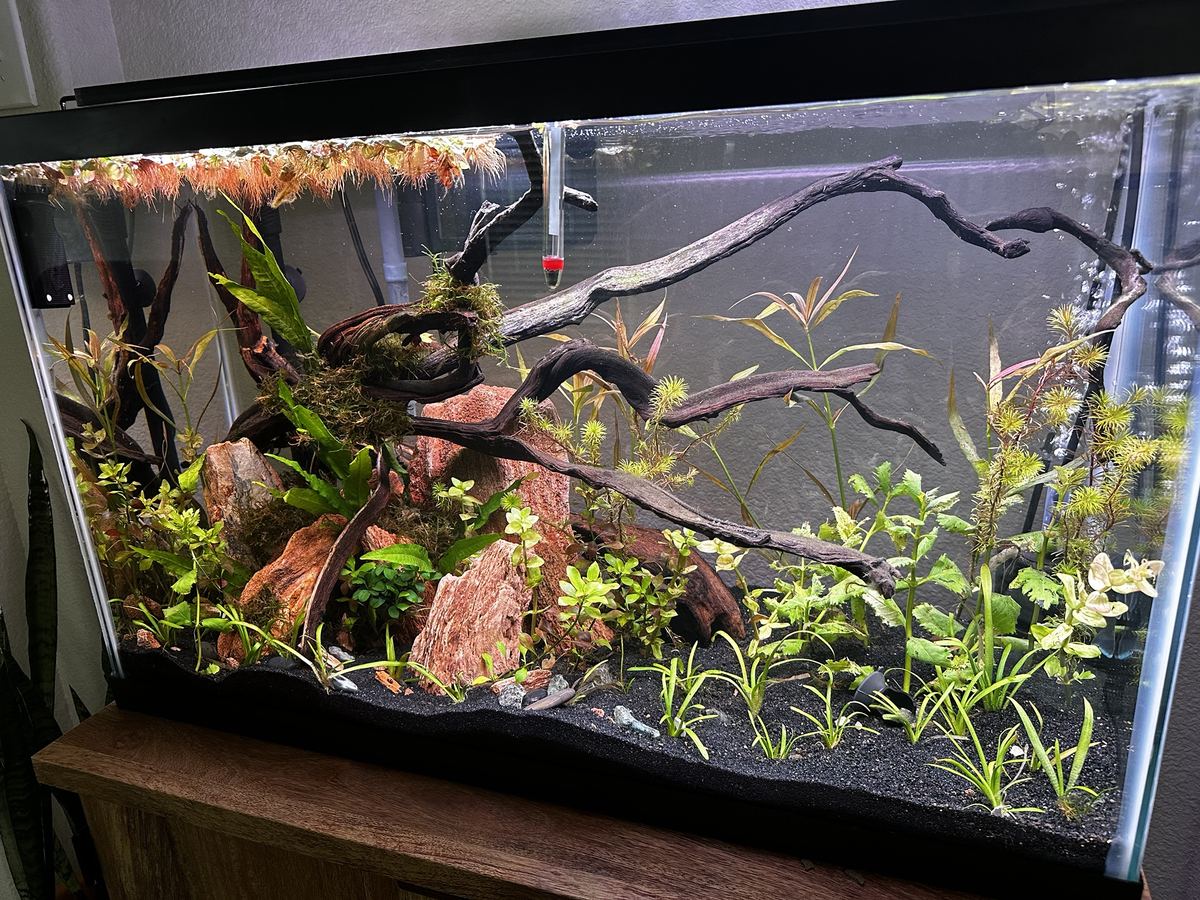
Pick a style
- Nature style: wood, rock and plants that look like a hillside or forest. The most popular style, and forgiving for beginners.
- Iwagumi: mostly rock, with one main stone and a carpet of tiny plants. Beautiful, but carpets usually need strong light and CO2.
- Jungle: lots of tall, wild plants and floating plants. The easiest style, and fish love it.
- Blackwater: driftwood, leaves and tea-colored water, a natural look for tetras, gouramis and plecos.
Five design rules
- Pick a focal point and place it about one third of the way across the tank, not dead center.
- Slope the substrate from low at the front to high at the back. It makes the tank look deeper.
- Short plants in front, tall plants at the back, medium plants in between.
- Use one kind of rock and one kind of wood. Mixing types looks busy.
- Leave open space for fish to swim and for the eye to rest.
Hardscape: wood, rock and sand
- Driftwood: spider wood and Malaysian wood are the easiest to build with. See aquarium driftwood.
- Rock: dragon stone and lava rock are safe for most tanks. Seiryu stone looks striking but slowly makes water harder. If you aren't sure about a rock, put a few drops of vinegar on it: fizzing means it will raise pH. See aquarium pH.
- Substrate: plant soil or a plant gravel under the planted areas, and sand for open spaces at the front. Work out how much you need with the substrate calculator, and see the best gravel and sand.
Build the hardscape in the empty tank first, take a photo, and look at it for a day before adding water. It's much easier to move rocks now than later.
Easy plants for aquascapes
| Where | Plants |
|---|---|
| Foreground | Cryptocoryne parva, dwarf sagittaria, java moss on stones |
| Midground | Anubias nana, java fern, cryptocoryne wendtii, bucephalandra |
| Background | Vallisneria, Amazon sword, rotala, hygrophila |
| On wood | Java fern, anubias, mosses |
| Surface | Red root floaters, salvinia, frogbit |
Tie or glue java fern and anubias to wood and rock instead of burying their roots. See easy aquarium plants for beginners.
Planting day, step by step
- Place the hardscape and substrate.
- Fill the tank about a third with water, so plants stay wet and are easy to place.
- Plant with long aquascaping tweezers, starting at the back.
- Fill slowly, pouring onto a plate or bag so you don't disturb the sand.
- Start with the light on 6 hours a day and raise it slowly over a few weeks.
- Cycle the tank before adding fish. See how to cycle a fish tank.
Keeping it looking good
- Trim every week or two. Cut stem plants and replant the tops to keep them bushy.
- Feed the plants. See CO2 and fertilizer for planted tanks.
- Add algae eaters once the tank is cycled: cherry shrimp, nerite snails and otocinclus are all gentle on plants.
- Expect an ugly phase. Most new tanks get some algae in the first 2 months. Keep the light short and it passes. See algae types and fixes.
Aquascaping picks
Paid links: if you buy through these Amazon links, I earn a small commission at no extra cost to you.
- Plant soilFluval Plant and Shrimp Stratum, 8.8 lbPlant and shrimp soil for the planted areas.
- ToolsAquascaping tweezers and scissorsLong tweezers and curved scissors make planting and trimming much easier.
- DriftwoodSpider wood and Malaysian driftwoodBranchy wood to build the main shape of your scape.
- RockDragon stoneTextured rock that is safe for most tanks.
Setting up a new tank? Your First Aquarium covers lights, plants and cycling step by step, with shopping lists for 10, 20 and 29 gallon tanks. Get the guide for $12

Related: Aquarium driftwood · Easy aquarium plants · CO2 and fertilizer